
Blog
 Read more: Materiality assessment legislation — a global comparison
Materiality assessment legislation — a global comparison
Twenty-three jurisdictions now mandate some form of sustainability materiality assessment. The number has tripled since 2021. Yet the word “materiality” means different things depending on where a company is incorporated, where it is listed, and which regulator is watching — and the practical consequences of that divergence are significant. A…
 Read more: EU Voluntary Standard for Sustainability Reporting: Draft Delegated Regulation and the Value Chain Cap Explained
EU Voluntary Standard for Sustainability Reporting: Draft Delegated Regulation and the Value Chain Cap Explained
Draft Delegated Regulation Ref. Ares(2026)4624010 – Published 6 May 2026 The value chain cap is now a legally binding instrument. The European Commission has published the draft Delegated Regulation that elevates the VSME from a non-binding Recommendation into EU law – and sets a formal ceiling on the sustainability data…
 Read more: Dust Pollution: Health Risks, Climate Impacts and What the Science Says
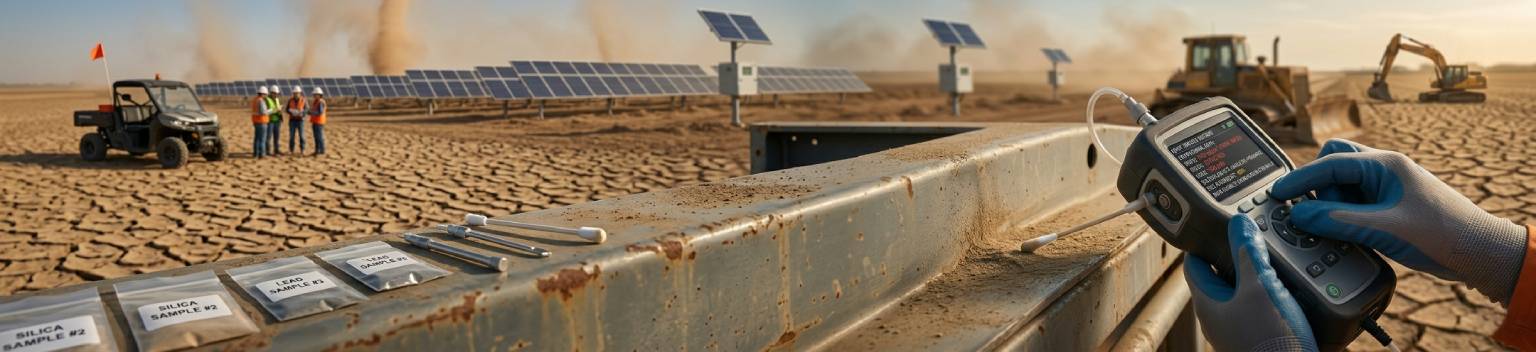
Dust Pollution: Health Risks, Climate Impacts and What the Science Says
Dust is the most underestimated substance on Earth. Every year, roughly two billion tonnes of mineral dust are swept into the atmosphere from deserts, dried lakebeds and degraded farmland. It crosses oceans, seeds clouds, fertilises rainforests, carries toxic metals into our lungs — and may have catalysed the first organic…
 Read more: Impact measurement challenges: what the SSF Spotlight paper reveals
Impact measurement challenges: what the SSF Spotlight paper reveals
Impact investing now accounts for CHF 228 billion in assets under management in Switzerland alone. Yet a persistent question hangs over the industry: can investors actually prove the outcomes they claim to deliver? A new report from Swiss Sustainable Finance offers some of the clearest evidence to date that the…
 Read more: VSME and GRI: how the two frameworks connect
VSME and GRI: how the two frameworks connect
The Global Reporting Initiative (GRI) standards are the world’s most widely adopted voluntary sustainability reporting framework, used by organisations in over 100 countries. When EFRAG developed the VSME, it built the standard to be consistent with ESRS Set 1, which itself was designed with high interoperability with GRI — a…
 Read more: ESG rating penalties
ESG rating penalties
On 25 April 2026, the European Commission adopted a delegated regulation setting out the procedural rules for fines and periodic penalty payments that the European Securities and Markets Authority (ESMA) may impose on ESG rating providers under Regulation (EU) 2024/3005. The delegated act fills one of the final gaps in…
 Read more: From exposure draft to recommendation: how the VSME standard evolved
From exposure draft to recommendation: how the VSME standard evolved
The VSME standard that exists today — two modules, 20 disclosures, no materiality assessment, an “if applicable” principle — looks nothing like the version EFRAG first put out for consultation. The journey from a three-module exposure draft with a full materiality requirement to the streamlined Commission Recommendation adopted in July…
 Read more: The VSME Digital Template and XBRL taxonomy explained
The VSME Digital Template and XBRL taxonomy explained
When EFRAG issued the VSME standard in December 2024, it did not stop at publishing a PDF. It also released a Digital Template — an Excel workbook that SMEs can fill in and convert to machine-readable XBRL format — alongside an open-source XBRL taxonomy and an online converter. Now at…
 Read more: Defence and ESG: How the EU Is Redrawing the Line Between Security and Sustainable Finance
Defence and ESG: How the EU Is Redrawing the Line Between Security and Sustainable Finance
Regulation & Policy The EU has formally clarified: sustainable finance is compatible with defence. What does this mean for investors, reporting, and ESG data? Commission Notice C/2025/4950 and Delegated Regulation (EU) 2025/1775 redraw the line between security and ESG—narrowing automatic exclusions and reframing defence as a contributor to social sustainability.…
 Read more: VSME and CSRD/ESRS: how they connect and where the gaps are
VSME and CSRD/ESRS: how they connect and where the gaps are
The VSME and ESRS are not competing standards. They are part of a single reporting architecture designed by EFRAG to serve different sizes of company within the same sustainability data ecosystem. Large companies report under ESRS. Non-listed SMEs report voluntarily under the VSME. The critical connection between the two is…

Subscribe to our Newsletter!
The latest news and events related to impact, risk, and sustainability around the world.

