
Blog
 Read more: GRI 102 (Climate Change 2025): what changes and how to prepare
GRI 102 (Climate Change 2025): what changes and how to prepare
GRI 102: Climate Change 2025 takes effect on 1 January 2027 and replaces the greenhouse gas disclosures in GRI 305. A clear guide to its ten disclosures, just transition, interoperability with ESRS and IFRS S2, and how to prepare.
 Read more: Changes in EU Deforestation Regulation (EUDR)
Changes in EU Deforestation Regulation (EUDR)
On 13 July 2026 the European Commission adopted a delegated act that changes the product scope of the EU Deforestation Regulation (EUDR), the law that will require companies to prove their goods are not linked to deforestation before selling them in, or exporting them from, the EU. The regulation itself…
 Read more: Simplified ESRS (ESRS 2026): deep analysis of the revised standards
Simplified ESRS (ESRS 2026): deep analysis of the revised standards
On 3 July 2026 the European Commission adopted the delegated act that revises the European Sustainability Reporting Standards (ESRS). The act amends Commission Delegated Regulation (EU) 2023/2772, which established the first set of ESRS, and it is the technical centrepiece of the Omnibus I simplification package. The revised standards, widely…
 Read more: L’ambiente per gli investimenti in Italia e il settore tecnologico
L’ambiente per gli investimenti in Italia e il settore tecnologico
Italia: Un report di ricerca su capitale, crescita dimensionale e innovazione nella terza economia dell’area euro Aggiornato a metà giugno 2026 Questo report analizza perché l’Italia attrae ingenti volumi di capitale in alcuni ambiti e fatica ad attrarne in altri, e che cosa questo schema implica per investitori, fondatori, decisori…
 Read more: EU Digital Action Plan for the Water Sector
EU Digital Action Plan for the Water Sector
The European Commission opened a call for evidence on 27 May 2026 for a new initiative titled “Water sector — accelerating digitalisation for better management and sustainability.” Referenced as Ares(2026)5310172, the document outlines the political context, problem definition, and strategic pillars for a forthcoming Communication to the European Parliament and…
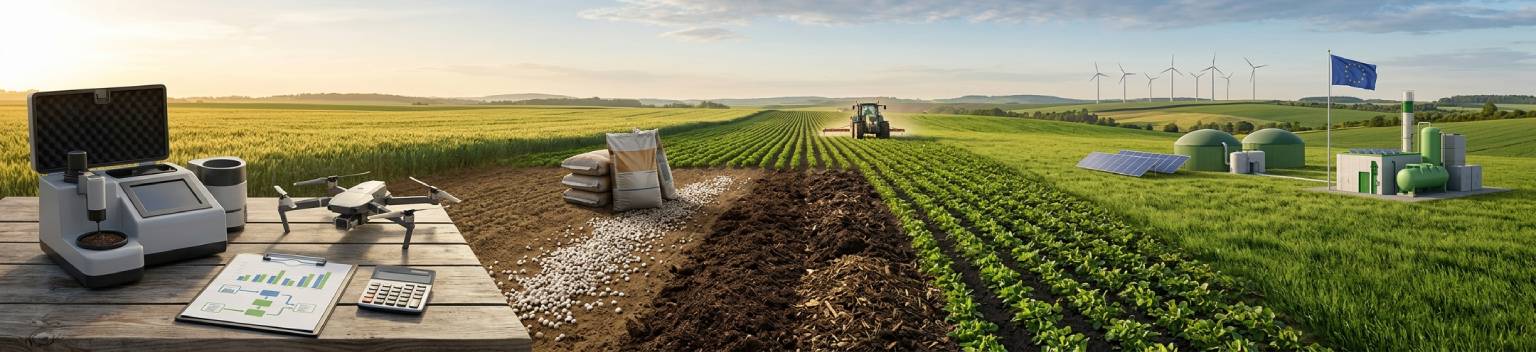 Read more: EU Fertiliser Action Plan: what it means for ESG reporting and supply chain sustainability
EU Fertiliser Action Plan: what it means for ESG reporting and supply chain sustainability
On 19 May 2026, the European Commission adopted the Fertiliser Action Plan — an initiative designed to shield European farmers from rising input costs, rebuild domestic production capacity, and reduce the bloc’s dependence on imported fertilisers. For sustainability teams, ESG data managers, and financial institutions, this is far more than…
 Read more: Materiality assessment legislation — a global comparison
Materiality assessment legislation — a global comparison
Twenty-three jurisdictions now mandate some form of sustainability materiality assessment. The number has tripled since 2021. Yet the word “materiality” means different things depending on where a company is incorporated, where it is listed, and which regulator is watching — and the practical consequences of that divergence are significant. A…
 Read more: EU Voluntary Standard for Sustainability Reporting: Draft Delegated Regulation and the Value Chain Cap Explained
EU Voluntary Standard for Sustainability Reporting: Draft Delegated Regulation and the Value Chain Cap Explained
Draft Delegated Regulation Ref. Ares(2026)4624010 – Published 6 May 2026 The value chain cap is now a legally binding instrument. The European Commission has published the draft Delegated Regulation that elevates the VSME from a non-binding Recommendation into EU law – and sets a formal ceiling on the sustainability data…
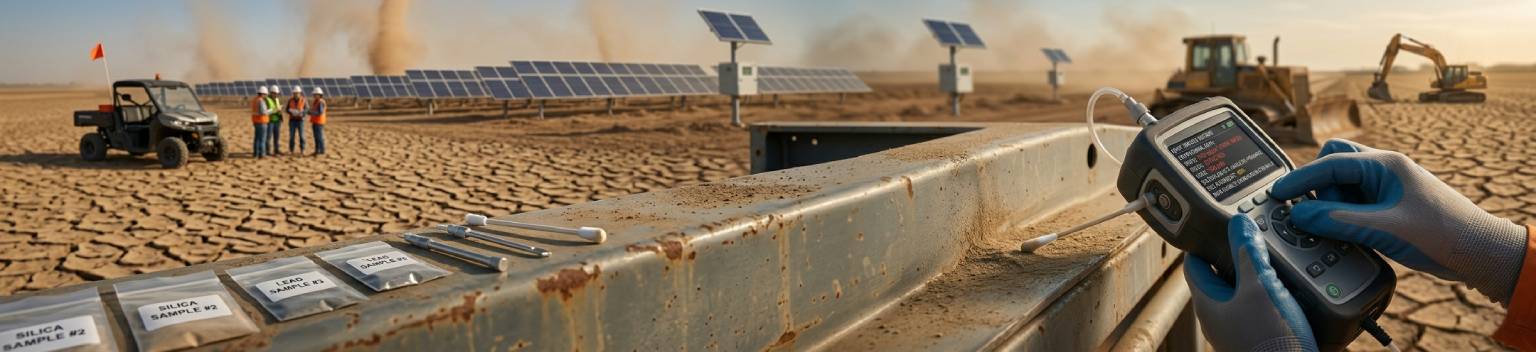 Read more: Dust Pollution: Health Risks, Climate Impacts and What the Science Says
Dust Pollution: Health Risks, Climate Impacts and What the Science Says
Dust is the most underestimated substance on Earth. Every year, roughly two billion tonnes of mineral dust are swept into the atmosphere from deserts, dried lakebeds and degraded farmland. It crosses oceans, seeds clouds, fertilises rainforests, carries toxic metals into our lungs — and may have catalysed the first organic…
 Read more: Impact measurement challenges: what the SSF Spotlight paper reveals
Impact measurement challenges: what the SSF Spotlight paper reveals
Impact investing now accounts for CHF 228 billion in assets under management in Switzerland alone. Yet a persistent question hangs over the industry: can investors actually prove the outcomes they claim to deliver? A new report from Swiss Sustainable Finance offers some of the clearest evidence to date that the…

Subscribe to our Newsletter!
The latest news and events related to impact, risk, and sustainability around the world.

