
Integrations and API
Your ESG data, programmable
An Application Programming Interface (API) lets your existing software systems talk directly to the GIG platform: sending data in, pulling disclosures out, and automating workflows that would otherwise require manual effort.
Our REST API is the two-way bridge between your infrastructure and your ESG reporting obligations.
Available on Enterprise tier or by request.
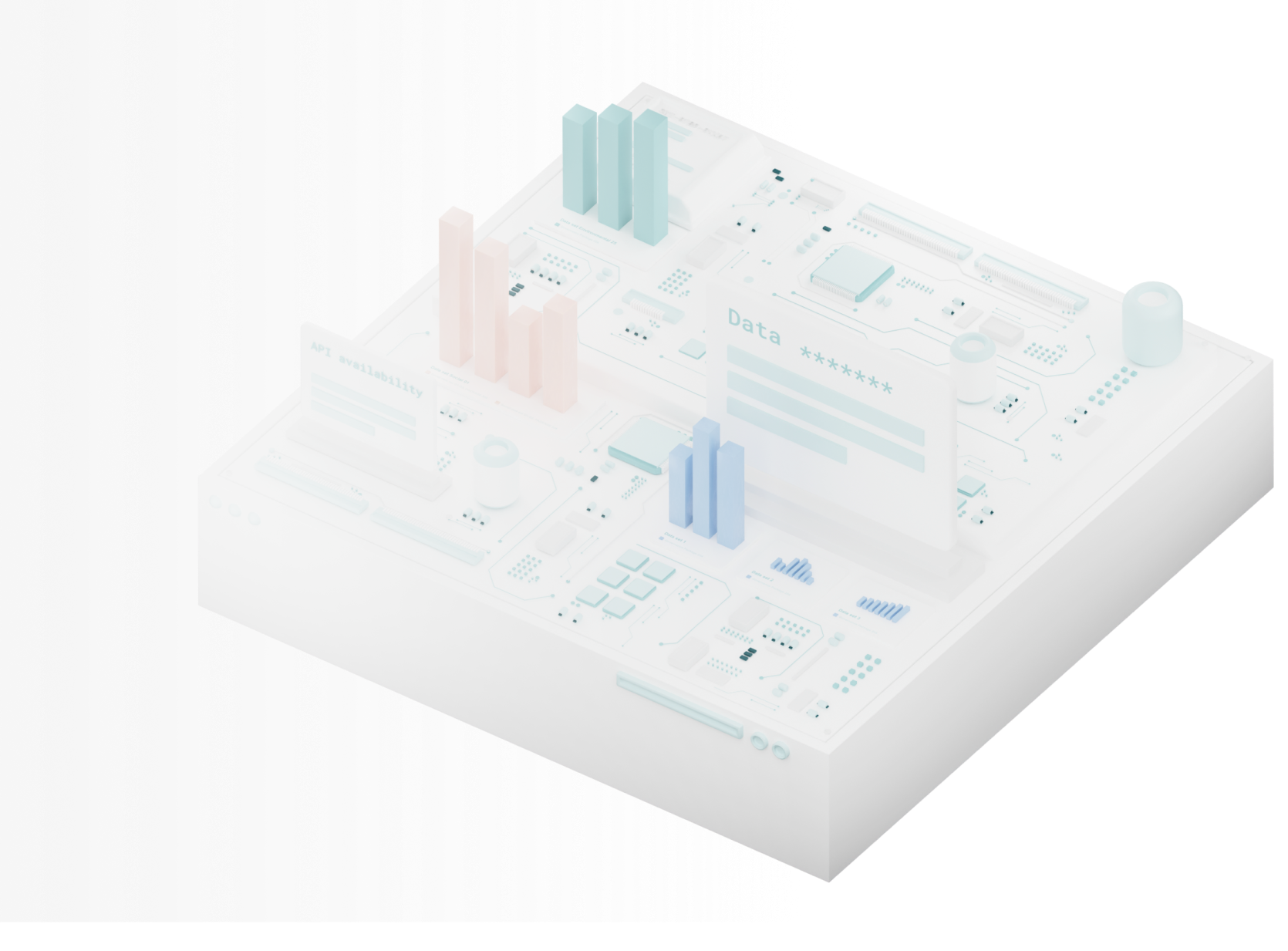
How the interoperability engine works
Most APIs just move data between systems. Ours does that too, but the data doesn’t land in a generic database. It lands in a governed environment where it is mapped to framework data points, linked to the correct entity, and made available through the interoperability engine.
So when your ERP pushes energy consumption figures, those figures get structured as ESRS E1-5 data points, cross-referenced against GRI 302, and made available for SFDR PAI calculations. Automatically.
ERP: Energy Data
REST APIengine
Interoperability engine
ESRS: E1-S
GRI 302
SFDR PAI
Technical credentials
REST over HTTPS · Secure authentication with scoped tokens · JSON request/response, CSV and XBRL exports · Webhooks for event-driven workflows · Full documentation with interactive sandbox
What the API connects
Portfolio management systems
Bloomberg AIM, proprietary PMS. Holdings, NAV, entity metadata synced automatically.
Questionnaire automation
Trigger QB-EDGE sends programmatically. Track status, retrieve responses.
Reporting pipelines
Export framework-aligned disclosures in machine-readable formats.
Entity and fund structures
Manage hierarchies, relationships, permissions programmatically.
Data providers
Ingest from rating agencies and benchmark services.
Partner ecosystems
Open-ES, SAP, Oracle sustainability modules.
Auditors and regulators
Secure, authenticated access with full traceability.
Use cases
Asset manager: automated PAI collection
120 portfolio companies. Used to spend six weeks chasing data by email. Now: questionnaires go out at cycle start, responses ingested automatically, validated against SFDR, fund-level reports exported. Manual work is exception handling only.
Enterprise: CSRD disclosure pipeline
Twelve subsidiaries. SAP pushes energy, waste, workforce data. Interoperability engine maps to ESRS. Each subsidiary gets a disclosure-ready dataset. Eight weeks of work now runs continuously.
Fund administrator: multi-client reporting
Seven clients, different SFDR obligations. Bloomberg syncs each morning. Data collection distributed to portfolio companies. One infrastructure, seven outputs.
Platform integrator: embedded ESG layer
A fintech embeds GIG’s framework mappings and disclosure exports into its own product. Their users never see the GIG interface. The compliance architecture runs underneath.
Security and compliance

Access control
Secure authentication, role-based scoping, audit-logged calls

Data residency
European hosting, configurable residency options

Compliance
GDPR-compliant, SOC 2 aligned, regular pen testing
Build on top of your ESG data
API access available on Enterprise tier or by request
Questions related to Data Management
What systems can the API integrate with?
The API connects with portfolio management systems such as Bloomberg AIM and proprietary PMS platforms, ERP systems, data providers and rating agencies, and partner ecosystems including Open-ES, SAP, and Oracle sustainability modules. It also supports questionnaire automation, entity and fund structure management, reporting pipeline exports, and secure access for auditors and regulators.
Is the API read-only, or can it write data into the platform?
It’s two-way. You can push data into the platform — for example, an ERP sending energy consumption figures — and pull disclosures and framework-aligned exports back out. Incoming data is automatically mapped to the relevant data points across frameworks like ESRS, GRI, and SFDR, rather than landing in a generic database.
What level of technical expertise is needed to integrate?
Integration follows standard REST API conventions — HTTPS, JSON request/response, and token-based authentication, with webhooks for event-driven workflows. Full documentation and an interactive sandbox are provided, so a developer with general REST API experience can get connected without needing specialized ESG or GIG-specific expertise.