
ESG Investment & Finance
Turn ESG data into investable insight.
ESG investment is no longer only about values, ratings or annual reports.
Investors, banks, asset managers and private market teams need ESG data they can trust. They need to know where the data came from, who provided it, what evidence supports it and how it can be used across funds, disclosures and decisions.
Generation Impact helps financial institutions collect, structure, review and reuse ESG data across funds, portfolios, investees, due diligence, SFDR PAI reporting, EU Taxonomy workflows, dashboards and investor reporting.
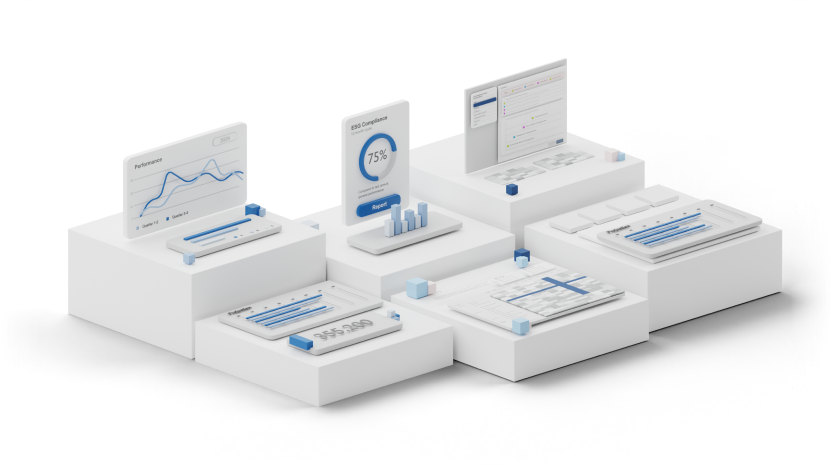
What is ESG Investing?
ESG investing means using environmental, social and governance information as part of investment analysis.
It helps investors look beyond financial numbers and ask better questions:
How exposed is this company to climate, workforce or governance risks?
Is the company managing sustainability issues well?
Does the investment support a specific ESG or impact objective?
Can the fund explain its ESG approach clearly?
The problem is simple: ESG investing needs reliable data.
A score may help with screening, but investment teams need more than a score. They need structured data, evidence and review. A strong ESG data management platform helps turn scattered information into something useful.
What Does ESG Mean in Finance?
In finance, ESG means using environmental, social and governance information to understand risk, opportunity, exposure and performance.
It can support:
Investment decisions
Lending and credit review
Fund monitoring
Due diligence
Investor reporting
For financial institutions, ESG is not only a reporting topic. It affects how capital is allocated, how risk is reviewed and how fund claims are explained.
That is why ESG finance needs a controlled data foundation.
ESG Investment Funds Explained
ESG investment funds use environmental, social and governance considerations as part of the fund strategy.
But not all ESG funds work in the same way.
Some exclude certain sectors. Some invest in companies with stronger ESG performance. Some focus on climate transition, social outcomes or sustainable infrastructure. Others integrate ESG into investment analysis without presenting themselves as impact funds.
The key issue is transparency. A fund needs to explain:
What ESG approach it uses
Which data supports the approach;
How portfolio companies are assessed;
How indicators are monitored;
How fund-level results are reported.
For EU financial market participants, this may also connect to SFDR PAI reporting and wider SFDR requirements.
ESG Mutual Funds
ESG mutual funds pool investor capital into a managed portfolio that applies ESG criteria, sustainability themes or ESG integration. The challenge is not only choosing investments — it is maintaining reliable ESG information across the fund.
ESG Index Funds
ESG index funds track an index that uses ESG-related rules. Those rules may exclude companies, change weightings or select companies based on ESG scores, themes or sustainability criteria. The key question is: can the methodology be explained clearly?
ESG Impact Funds
ESG impact funds usually aim to generate measurable environmental or social outcomes alongside financial return. They need clear objectives, KPIs, evidence and progress tracking. Generation Impact helps teams manage those indicators, evidence and dashboards in one workflow.
ESG in Banking & Private Equity
ESG data is used differently across finance.
Banks may use ESG information for client assessment, lending risk, transition exposure, sustainable finance workflows and regulatory reporting.
Private equity firms may use ESG data before investment, during ownership and at exit.
Portfolio companies may have different levels of ESG maturity. Some already report under recognised frameworks. Others have partial data, informal processes or evidence stored across emails and documents.
Generation Impact helps investors and financial teams collect ESG data from companies, request evidence, track gaps and monitor indicators across funds or portfolios.
For sector-specific sustainability risks and opportunities, banks, insurers and asset managers can also use double materiality for financial services.
Where portfolio companies need structured reporting, link their process to ESRS reporting standards.
ESG vs Impact Investing
ESG investing and impact investing are related, but they are not the same.
| Argomento | ESG investing | Impact investing |
|---|---|---|
| Main focus | ESG risks, opportunities and governance factors | Measurable environmental or social outcomes |
| Typical use | Risk analysis, screening, portfolio construction, reporting | Intentional impact strategy and outcome measurement |
| Data need | ESG indicators, policies, disclosures and evidence | Impact KPIs, baselines, targets, outcomes and evidence |
| Key question | How do ESG factors affect the investment? | What positive outcome is the investment designed to create? |
Impact investors often need to connect indicators to outcomes, evidence and a wider ESG strategy.
Socially Responsible Investing (SRI) & ESG
Socially responsible investing, or SRI, is usually values-led. It may exclude companies or sectors that do not match an investor’s ethical, religious or social preferences.
ESG investing is broader. It may include exclusions, but it also looks at risk, opportunity, governance, sustainability performance and portfolio monitoring.
The difference matters. A values-led SRI fund, an ESG-integrated fund and an impact fund may all sit under sustainable finance, but they need different data and different explanations.
Generation Impact helps teams structure the policies, indicators and evidence behind those approaches.
ESG Investment Trends & Market Outlook
ESG investment is moving from broad claims to better data.
More scrutiny
Fund claims need clearer evidence and methodology.
More regulation
Teams need structured data for disclosures and reporting workflows.
More portfolio data
Investors need information from investees, not only public ratings.
More focus on data quality
Source, evidence and review status matter.
More demand for reuse
The same data is needed for due diligence, SFDR, Taxonomy, dashboards and investors.
More analytics
Dashboards and AI are useful only when the data is structured and governed.
The direction is clear: ESG investing is becoming more data-driven. For dashboards, analytics and insight, connect this page to ESG data intelligence.
From ESG Scores to Investment-Grade Data
ESG scores can help, but they are not enough. Investment teams need to understand the information behind the score. Good ESG investment data should be:
Traceable
Teams can see where the data came from.
Evidenced
Documents or calculations support the information.
Comparable
Indicators are collected consistently.
Reviewed
Data is checked before use.
Configurable
Funds can reflect their own methodology.
Reusable
Approved data can support several workflows.
Aggregated
Company-level data can support fund and portfolio views.
Scores can support screening. Investment-grade ESG data needs traceability, evidence, ownership, review and framework interoperability.
How Generation Impact Supports ESG Investment & Finance
Generation Impact brings fund, portfolio, company, KPI, evidence and reporting data into one controlled platform. The workflow is simple:
01
Define fund, portfolio and reporting scope
02
Select participating companies or investees
03
Configure ESG indicators, impact KPIs and methodology
04
Collect data and evidence
05
Review completeness and consistency
06
Aggregate results at company, fund and portfolio level
07
Reuse approved data for SFDR, EU Taxonomy, due diligence, dashboards and investor reporting
This helps investment teams avoid rebuilding the same ESG information every time a fund review, investor request or reporting cycle begins.
Portfolio ESG Data Model
Generation Impact supports the structure behind portfolio ESG management.
Portfolio structure
- Holding
- Fondo
- SPV
- Portfolio company
- Asset
Raccolta dei dati
- Questionari
- KPI
- Evidence
- Documents
- Imports
Metodologia
- SFDR PAI
- Tassonomia dell'UE
- Impact KPIs
- Risk indicators
- Custom metrics
Aggregation
- Company level
- Fund level
- Portfolio level
- Weighting logic
Risultati
- Dashboards
- PAI statement
- Due diligence
- LP / board reporting
- Investment decisions
This connects how investment organisations are structured with how ESG data is collected, reviewed and reported.
One Portfolio Dataset, Multiple Uses
The same ESG data can serve many workflows.
| Caso d'uso | How the data is reused |
|---|---|
| SFDR PAI reporting | Collect and aggregate PAI indicators across investees and funds. |
| EU Taxonomy workflows | Use activity and financial data for eligibility and alignment analysis where relevant. |
| CSRD ed ESRS | Support portfolio-company reporting and structured sustainability data collection. |
| ESG due diligence | Review risks, policies, controls, gaps and evidence. |
| Portfolio monitoring | Track ESG KPIs, risks, gaps and progress. |
| Impact measurement | Connect KPIs to outcomes, SDGs or fund objectives. |
| Investor reporting | Respond to LP, board and stakeholder requests. |
| ESG data intelligence | Use dashboards for fund managers, risk teams and leadership. |
Collect once. Validate once. Reuse approved ESG data across investment and finance workflows.
What You Can Manage in Generation Impact
| Capability | What it helps manage |
|---|---|
| Fund and portfolio structure | Holding, fund, SPV, asset and portfolio company hierarchy. |
| Company participation | Which companies are included in a reporting or monitoring cycle. |
| ESG questionnaires | Standard or custom data requests. |
| SFDR PAI indicators | Data collection, review and aggregation for PAI workflows. |
| EU Taxonomy data | Activity, financial and eligibility or alignment information where relevant. |
| Impact KPIs | Fund, strategy or client-specific indicators. |
| Custom indicators | ESG, financial, percentage, narrative and evidence-based KPIs. |
| Evidence | Documents, calculations, comments and source files. |
| Weighting logic | NAV, EVIC or other configured portfolio weighting approaches where applicable. |
| Dashboards | Completion, gaps, portfolio views, fund summaries and trends. |
| Audit trail | Who submitted, reviewed, changed and approved data. |
Generation Impact does not replace professional judgement. It gives teams a clearer way to manage the ESG data, evidence and methodology behind investment decisions.
ESG Investing Tools & Certification
ESG investing tools can include data platforms, questionnaires, ratings, fund monitoring systems, reporting workflows, portfolio analytics and due diligence templates.
Professional education and certification can help teams understand ESG concepts and sustainable finance rules. But certification alone does not create reliable portfolio ESG data.
Investment teams still need a system to define indicators, collect information, request evidence, review data, aggregate results and reuse approved information over time.
Teams that are still assessing where to begin can explore free ESG tools or use the ESG reporting readiness assessment.
Related resources
Turn ESG data into investable insight.
ESG investment and finance should not depend on disconnected files, inconsistent questionnaires or unsupported claims.
Generation Impact helps financial institutions, funds and investment teams collect portfolio company data, manage evidence, configure ESG and impact indicators, aggregate results and reuse approved information across reporting, due diligence, dashboards and investor communication.
Domande frequenti
Che cos’è l’investimento ESG?
ESG investing is an investment approach that considers environmental, social and governance factors alongside financial analysis.
What does ESG mean in finance?
In finance, ESG means using environmental, social and governance information to assess companies, funds, portfolios, risks, impacts and disclosures.
How does ESG investing work?
ESG investing works by including ESG information in the investment process. This may involve exclusions, ESG integration, thematic investing, impact investing, stewardship, portfolio monitoring or regulatory reporting.
Is ESG investing profitable?
ESG investing does not guarantee higher returns. Performance depends on the fund strategy, asset class, market conditions, fees, methodology, manager skill and time horizon.
What are ESG investment funds?
ESG investment funds are funds that use environmental, social and governance considerations as part of their investment approach.
What is the difference between ESG investing and impact investing?
ESG investing considers ESG factors as part of risk, opportunity and portfolio analysis. Impact investing seeks measurable positive environmental or social outcomes alongside financial return.
What are the benefits of ESG investing?
A structured approach to ESG investing can help investors identify risk exposure earlier, compare funds and portfolio companies on a consistent basis, meet growing regulatory and investor disclosure expectations, and support due diligence and monitoring across the investment lifecycle. It does not guarantee higher returns — see “Is ESG investing profitable?” above.
What are the risks of ESG investing?
Risks include weak data quality, inconsistent methodologies, greenwashing, unclear fund claims, limited comparability and overreliance on ESG scores.
What are ESG mutual funds?
ESG mutual funds are managed investment funds that pool investor capital and apply ESG-related criteria, themes or integration methods.
What are ESG index funds?
ESG index funds track an index built with ESG-related rules, screens or scoring logic.
What is socially responsible investing?
Socially responsible investing, or SRI, is usually a values-based approach that may exclude companies or sectors that do not match an investor’s ethical, social or religious preferences.
How can funds collect ESG data from portfolio companies?
Funds can collect ESG data through structured questionnaires, KPI templates, evidence requests, document uploads, APIs or internal workflows.
How does ESG investment data support SFDR reporting?
ESG investment data can support SFDR reporting by helping funds collect and aggregate information related to principal adverse impacts, methodologies and disclosures.
How does ESG investment data support EU Taxonomy workflows?
Investment ESG data can support EU Taxonomy workflows by helping teams collect company, activity and financial information used in eligibility and alignment analysis where relevant.
What is the difference between ESG scoring and ESG data management?
ESG scoring summarises ESG information into a rating or score. ESG data management focuses on collecting, structuring, validating and maintaining the underlying data, evidence and methodology.
Can financial institutions use custom ESG KPIs?
Yes. Financial institutions often need custom ESG, impact, risk, financial or strategy-specific KPIs. Generation Impact supports configurable indicators for different funds, strategies and client requirements.
Articoli correlati
 Read more: European Commission proposes rating scheme to drive data centre energy efficiency
European Commission proposes rating scheme to drive data centre energy efficiency
 Read more: European Commission Unveils Strategy for EU Outermost Regions
European Commission Unveils Strategy for EU Outermost Regions
 Read more: EBA Publishes Final Guidelines on Third-Party Risk Management Aligned with DORA
EBA Publishes Final Guidelines on Third-Party Risk Management Aligned with DORA